





CRDT basics for collaboration: Practical Frontend Guide
CRDT basics for collaboration affects architecture, performance, and reliability more than most teams expect. Understanding the execution model and tradeoffs makes implementation decisions much clearer.
Why It Matters
- It influences user-perceived speed and stability under real workload.
- It changes how you model state, side effects, and recovery paths.
- It impacts long-term maintainability and debugging complexity.
Mental Model
Treat CRDT basics for collaboration as a system constraint, not a one-off feature. Design around measurable budgets, clear ownership of state transitions, and explicit fallback behavior.
Minimal Example
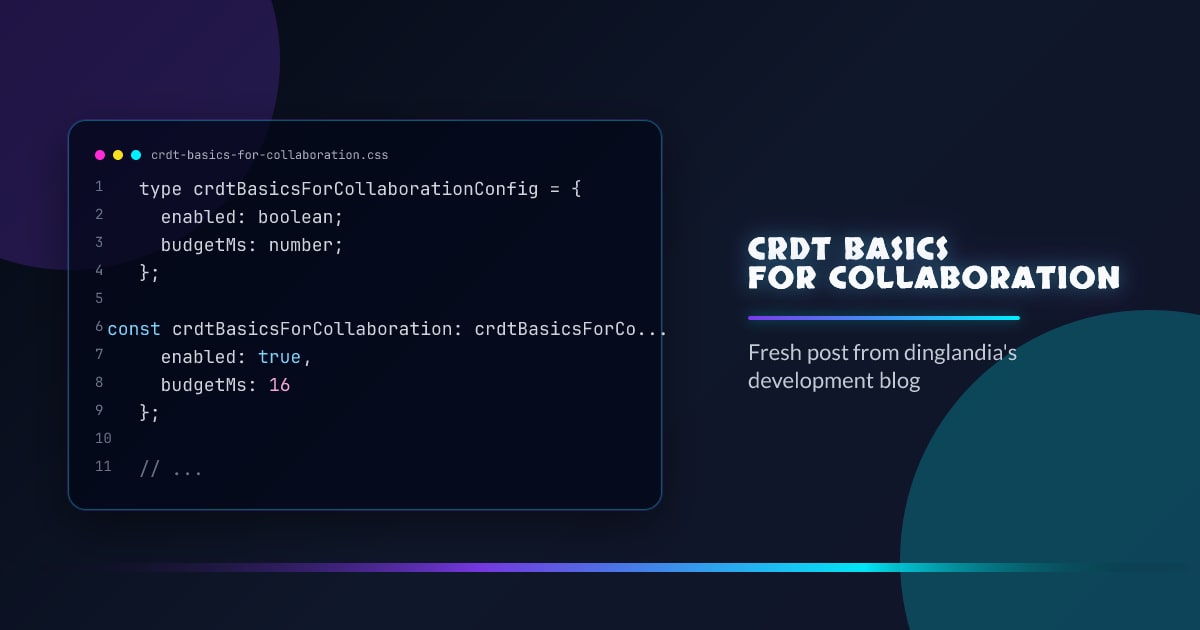
type crdtBasicsForCollaborationConfig = {
  enabled: boolean;
  budgetMs: number;
};

const crdtBasicsForCollaboration: crdtBasicsForCollaborationConfig = {
  enabled: true,
  budgetMs: 16,
};

export function applyCrdtBasicsForCollaboration() {
  if (!crdtBasicsForCollaboration.enabled) return;
  return `CRDT basics for collaboration enabled with budget: ${crdtBasicsForCollaboration.budgetMs}ms`;
}
Common Failure Modes
- Optimizing for happy-path demos instead of production edge cases.
- Mixing multiple patterns without clear boundaries.
- Shipping without instrumentation, making regressions hard to detect.
Implementation Checklist
- Define a performance and correctness budget before coding.
- Add observability around slow paths and retries.
- Verify behavior under stress, background tabs, and slow devices.
Closing
CRDT basics for collaboration becomes a force multiplier when treated as an architectural concern from the start, not a patch late in the release cycle.