





Custom Elements lifecycle: Practical Frontend Guide
Custom Elements lifecycle affects architecture, performance, and reliability more than most teams expect. Understanding the execution model and tradeoffs makes implementation decisions much clearer.
Why It Matters
- It influences user-perceived speed and stability under real workload.
- It changes how you model state, side effects, and recovery paths.
- It impacts long-term maintainability and debugging complexity.
Mental Model
Treat Custom Elements lifecycle as a system constraint, not a one-off feature. Design around measurable budgets, clear ownership of state transitions, and explicit fallback behavior.
Minimal Example
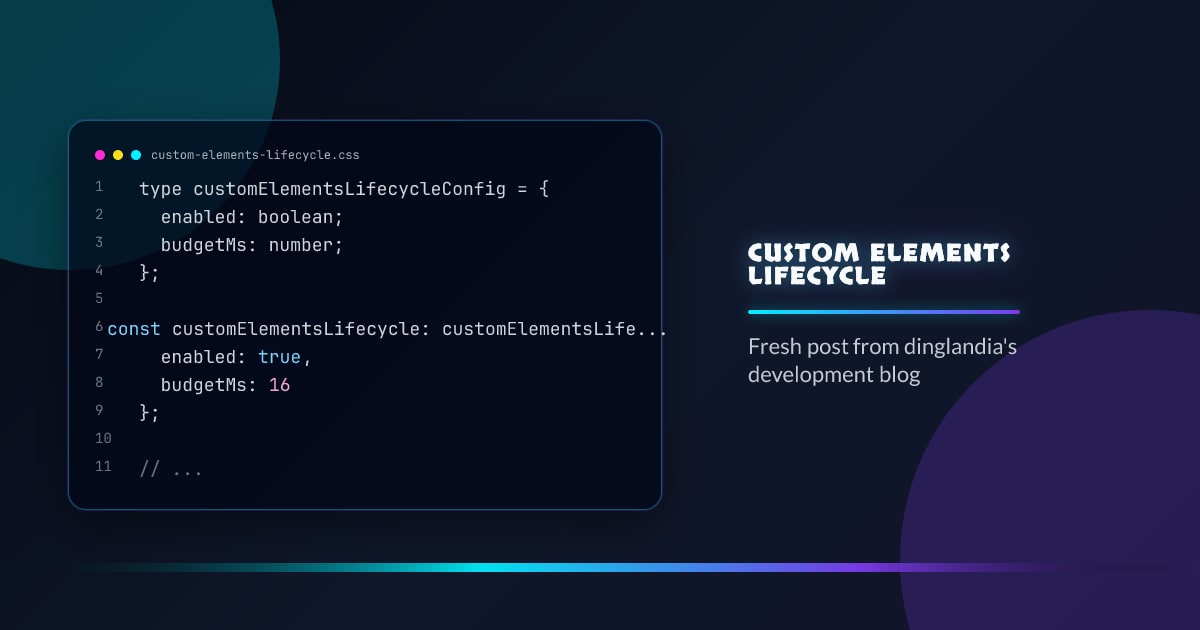
type customElementsLifecycleConfig = {
  enabled: boolean;
  budgetMs: number;
};

const customElementsLifecycle: customElementsLifecycleConfig = {
  enabled: true,
  budgetMs: 16,
};

export function applyCustomElementsLifecycle() {
  if (!customElementsLifecycle.enabled) return;
  return `Custom Elements lifecycle enabled with budget: ${customElementsLifecycle.budgetMs}ms`;
}
Common Failure Modes
- Optimizing for happy-path demos instead of production edge cases.
- Mixing multiple patterns without clear boundaries.
- Shipping without instrumentation, making regressions hard to detect.
Implementation Checklist
- Define a performance and correctness budget before coding.
- Add observability around slow paths and retries.
- Verify behavior under stress, background tabs, and slow devices.
Closing
Custom Elements lifecycle becomes a force multiplier when treated as an architectural concern from the start, not a patch late in the release cycle.
Browser support snapshot
Live support matrix for custom-elementsv1 from
Can I Use.
Show static fallback image

Source: caniuse.com