






Reducer Patterns with useReducer
useReducer is a state management hook for complex state logic — when next state depends on previous state across multiple operations, or when updates benefit from explicit named transitions.
Basic Usage
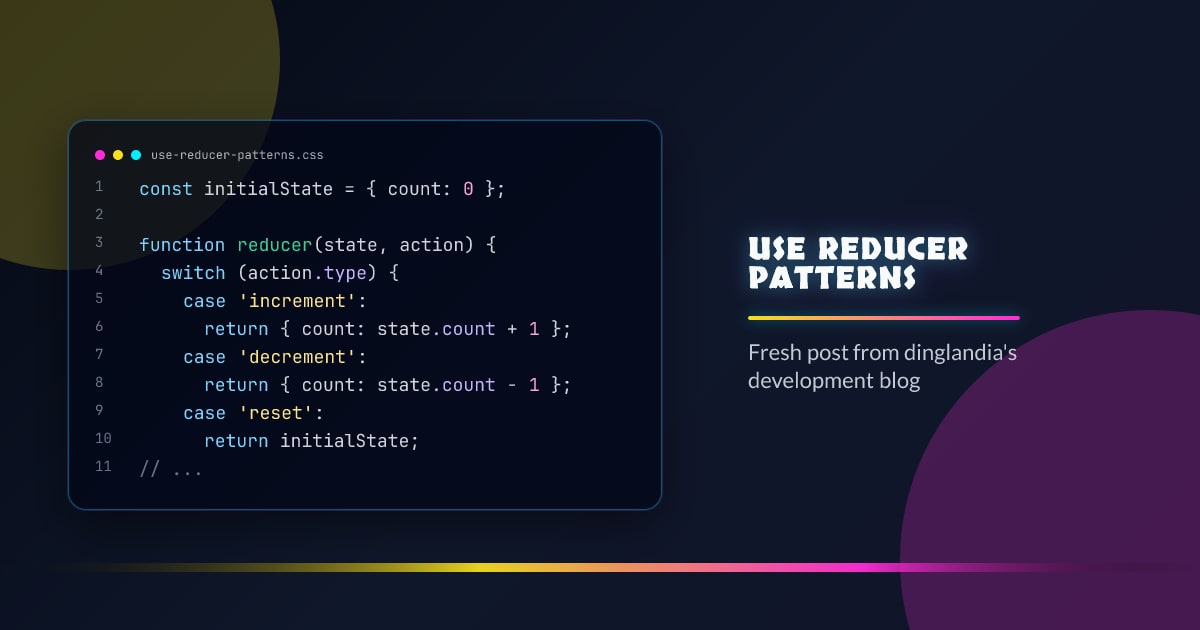
const initialState = { count: 0 };

function reducer(state, action) {
  switch (action.type) {
    case "increment":
      return { count: state.count + 1 };
    case "decrement":
      return { count: state.count - 1 };
    case "reset":
      return initialState;
    default:
      throw new Error(`Unknown action: ${action.type}`);
  }
}

function Counter() {
  const [state, dispatch] = useReducer(reducer, initialState);
  return (
    <>
      <p>{state.count}</p>
      <button onClick={() => dispatch({ type: "increment" })}>+</button>
      <button onClick={() => dispatch({ type: "decrement" })}>-</button>
    </>
  );
}
When useReducer Over useState
- Multiple related state fields that update together
- Next state depends on previous state in complex ways
- State transitions have names that make the code self-documenting
- You want to test state logic independently of the component
// useState version — hard to reason about
const [loading, setLoading] = useState(false);
const [data, setData] = useState(null);
const [error, setError] = useState(null);

// useReducer version — explicit, consistent transitions
const [state, dispatch] = useReducer(fetchReducer, {
  status: "idle",
  data: null,
  error: null,
});
// state.status is always 'idle' | 'loading' | 'success' | 'error'
Action Creators
const actions = {
  increment: () => ({ type: "increment" }),
  addItem: (item) => ({ type: "add_item", payload: item }),
};

dispatch(actions.addItem(newItem));
Immer Integration
import produce from "immer";

const reducer = produce((draft, action) => {
  switch (action.type) {
    case "add_item":
      draft.items.push(action.payload);
      break;
    case "remove_item":
      draft.items = draft.items.filter((i) => i.id !== action.payload);
      break;
  }
});
Lazy Initialization
const [state, dispatch] = useReducer(reducer, initialArg, init);
// init(initialArg) called once — defers expensive computation
Sharing Dispatch via Context
const DispatchContext = createContext();

function AppProvider({ children }) {
  const [state, dispatch] = useReducer(reducer, initialState);
  return (
    <DispatchContext.Provider value={dispatch}>
      <StateContext.Provider value={state}>{children}</StateContext.Provider>
    </DispatchContext.Provider>
  );
}

// Anywhere in the tree
const dispatch = useContext(DispatchContext);
dispatch({ type: "update_user", payload: user });
dispatch is stable — components that only dispatch don’t re-render when state changes.
Testing Reducers
Reducers are pure functions — trivial to unit test:
test("increment increases count", () => {
  const state = reducer({ count: 5 }, { type: "increment" });
  expect(state.count).toBe(6);
});