





WebRTC Improvements
Interop 2026 work on WebRTC is about the unglamorous details that decide whether a realtime product feels dependable. Audio, video, and data channels all look fine in a lab demo; the real test is how negotiation and recovery behave when the network gets messy.
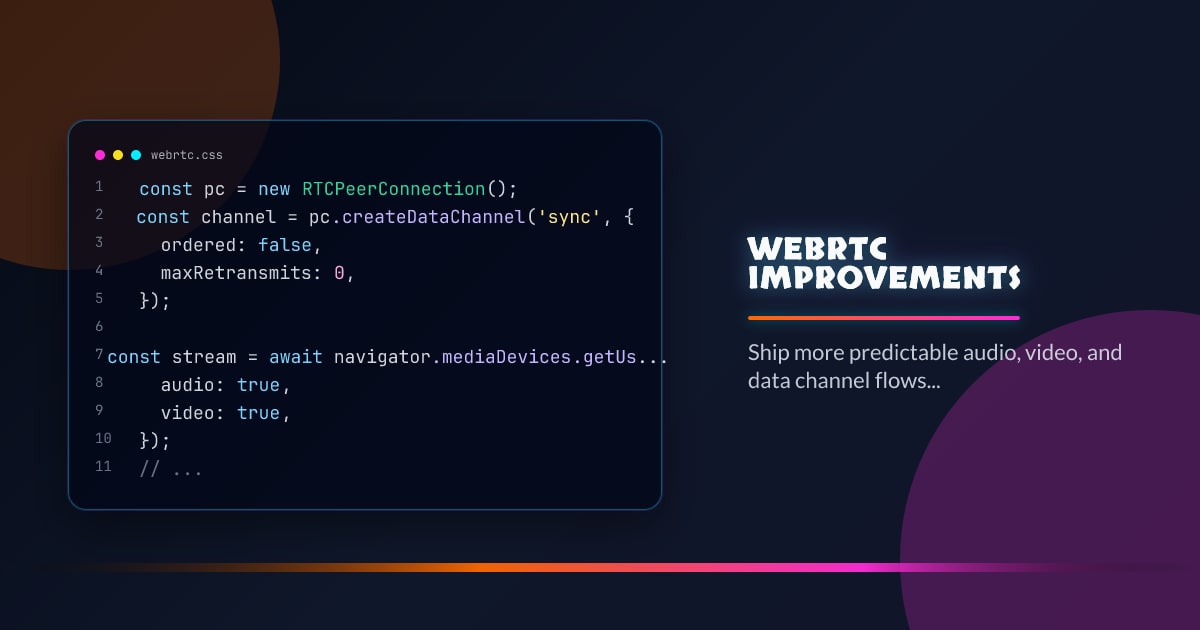
const pc = new RTCPeerConnection();
const channel = pc.createDataChannel("sync", {
  ordered: false,
  maxRetransmits: 0,
});

const stream = await navigator.mediaDevices.getUserMedia({
  audio: true,
  video: true,
});

for (const track of stream.getTracks()) {
  pc.addTrack(track, stream);
}
Treat Data Channels as a Separate Product Surface
Chat, cursors, presence, control messages, and low-latency state sync all have different reliability needs from audio and video. Make those choices explicit when you create the channel instead of treating it like a sidecar to media.
Own Track and Transceiver State
A good WebRTC implementation has a clear model for mute, pause, replace track, screen share handoff, and renegotiation. If those states only exist implicitly inside UI callbacks, debugging cross-browser failures becomes painful fast.
Stats Are Not Optional
Pull getStats() into your runtime model early. Packet loss, jitter, selected candidate pair, bitrate, and frame drops tell you whether the problem is network, codec, capture, or app behavior. Without that view, every failure looks random.
Interop 2026 Goal
The point is not inventing a new realtime API. It is reducing the edge-case drift between engines so the same negotiation, track, and recovery strategies are trustworthy enough to standardize inside your application architecture.
Browser support snapshot
Live support matrix for rtcpeerconnection from
Can I Use.
Show static fallback image

Source: caniuse.com